Reducing Delivery Friction: From Checkout to Customer Notifications
My Role:
UX Designer, UX Researcher
Type:
Service Design, Project Management
Platform:
Responsive Web, Communication (emails, SMS)
Duration:
2 months of a 6-month project
Summary
We partnered with a raw dog food retailer to transform their e-commerce experience through service design, aligning customer needs with operational realities. This case study highlights Phase 2 (Delivery Experience & Workflow Optimization), where our cross-functional team approach brought together design, marketing, and sales teams to drive measurable improvements.
3X higher delivery adoption
15%+ of orders now use delivery (up from 5%)
Business Growth
50% of delivery orders come from new customers
70% less staff time wasted
Saved 30+ hours/week of manual coordination
Challenge & Constrint
Scaling delivery services with constraints
Operational Limits
There isn’t much manpower to handle the delivery order.
Technical Constraints
Budget restrictions ruled out a full rebuild, but WooCommerce customization is limited.
Client Management
Business owner “perfect system” expectations vs. MVP.
Aggressive timeline: Phase 2 overlapped with Phase 1.
Goals & Milestones
Phase 2: Balance quick wins with long-term growth
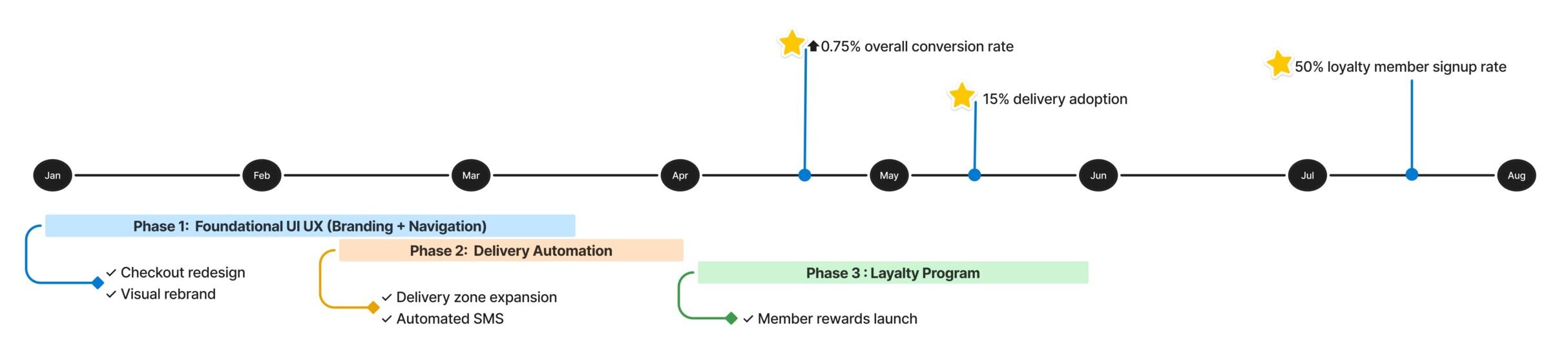
To balance immediate impact with technical constraints, we split the upgrade process into 3 strategic phases, each delivering measurable benefits while de-risking the project.
Expand market coverage to reach more new customers
😃 User Goal
Provide an excellent experience from checkout to product delivery
How might we provide customers with a seamless delivery experience while automating workflows?
Research & Discovery
Uncover delivery adoption barriers through customer data
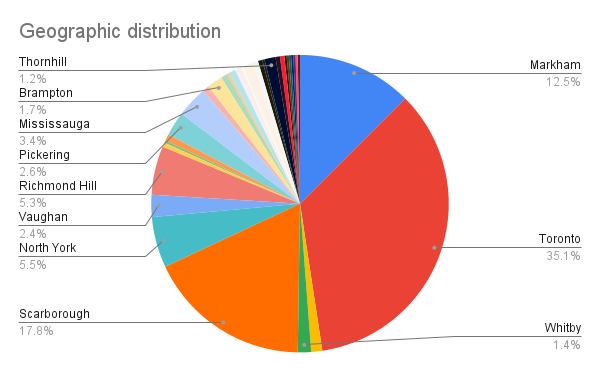
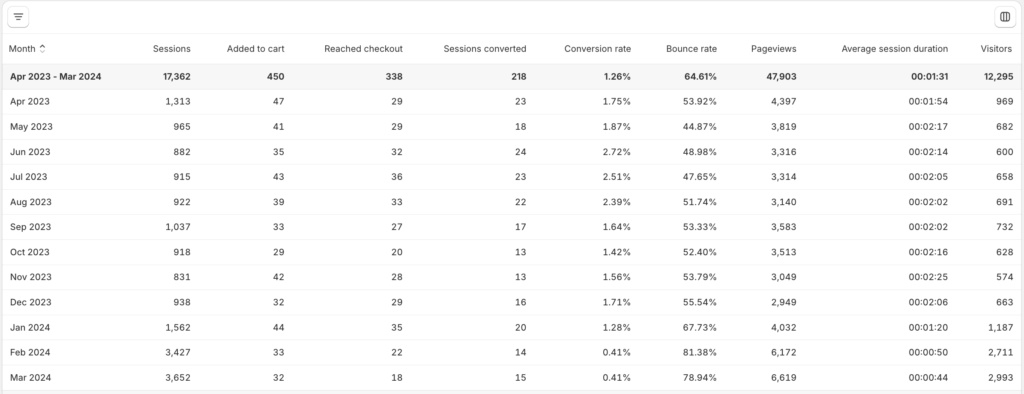
To identify delivery adoption trends, I analyzed 6 months of order data with the marketing team to better understand the customer behavior. We focused on data such as order type, geographic distribution, order amount, and found out the correlation between them.
💡 Key Insights:
Low Delivery Adoption:Only 5% of orders used delivery (vs. 31% grocery benchmark).
Geographic Limits: Orders are concentrated in Scarborough, with coverage in other areas being sparse.
New customers avoided delivery: 90% of online orders came from existing in-store customers.
Understand operational realities through stakeholder interviews
To identify key pain points and growth barriers, I conducted in-depth interviews with all delivery-facing staff (owner + 2 managers) to map pain points, time workflows throughout the delivery process, and collect existing customer complaints.
💡 Key Insights:
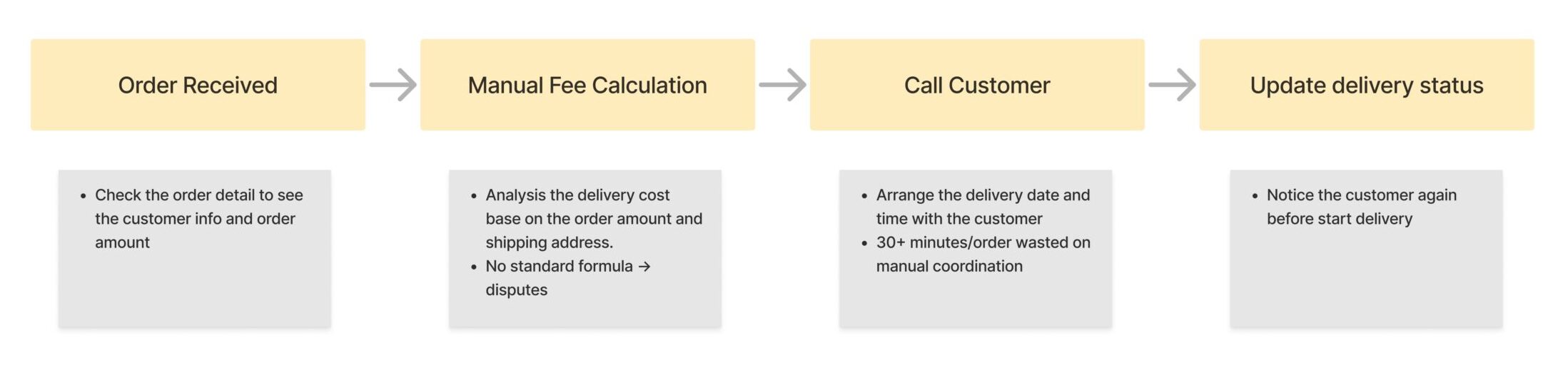
Manual Coordination: 30+ minutes wasted/order on customer coordination.
Inconsistent Pricing: Fee calculations vary due to distance and order value.
Lack of Transparency: Leads to customer confusion and inquiries of order status.
Find gaps and opportunities through competitive analysis
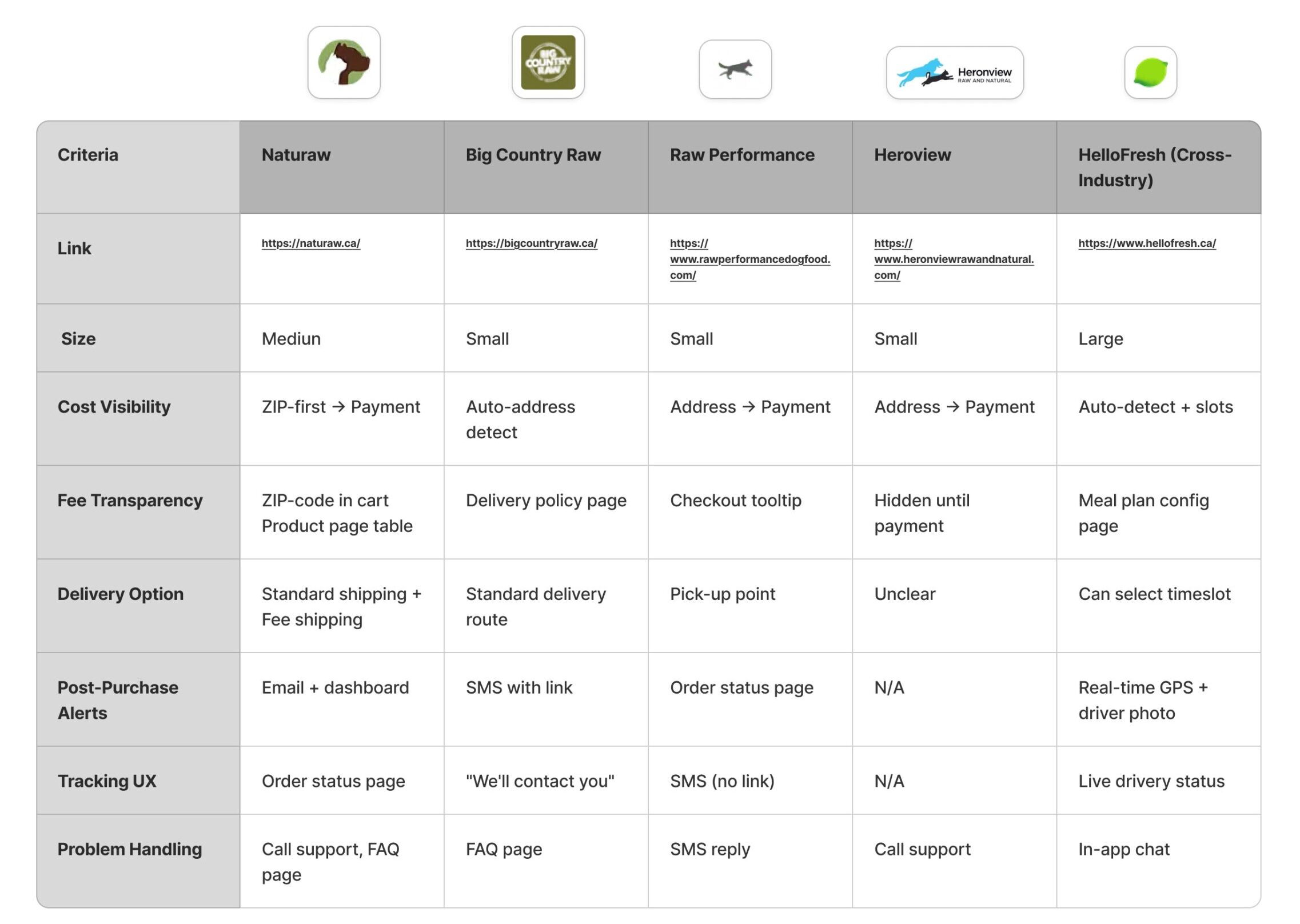
To identify relevant best practices, I focused on analyzing 4 direct competitors with similarly sized raw pet food brands and comparable business models and order volumes, as well as indirect benchmarks of a meal kit service that innovated its perishable food delivery model. My research method involved:
Mystery shopping: Experiencing the full delivery flow as a customer would
Interaction mapping: Documenting key touchpoints through screenshots
Feature analysis: Comparing systems through a structured matrix
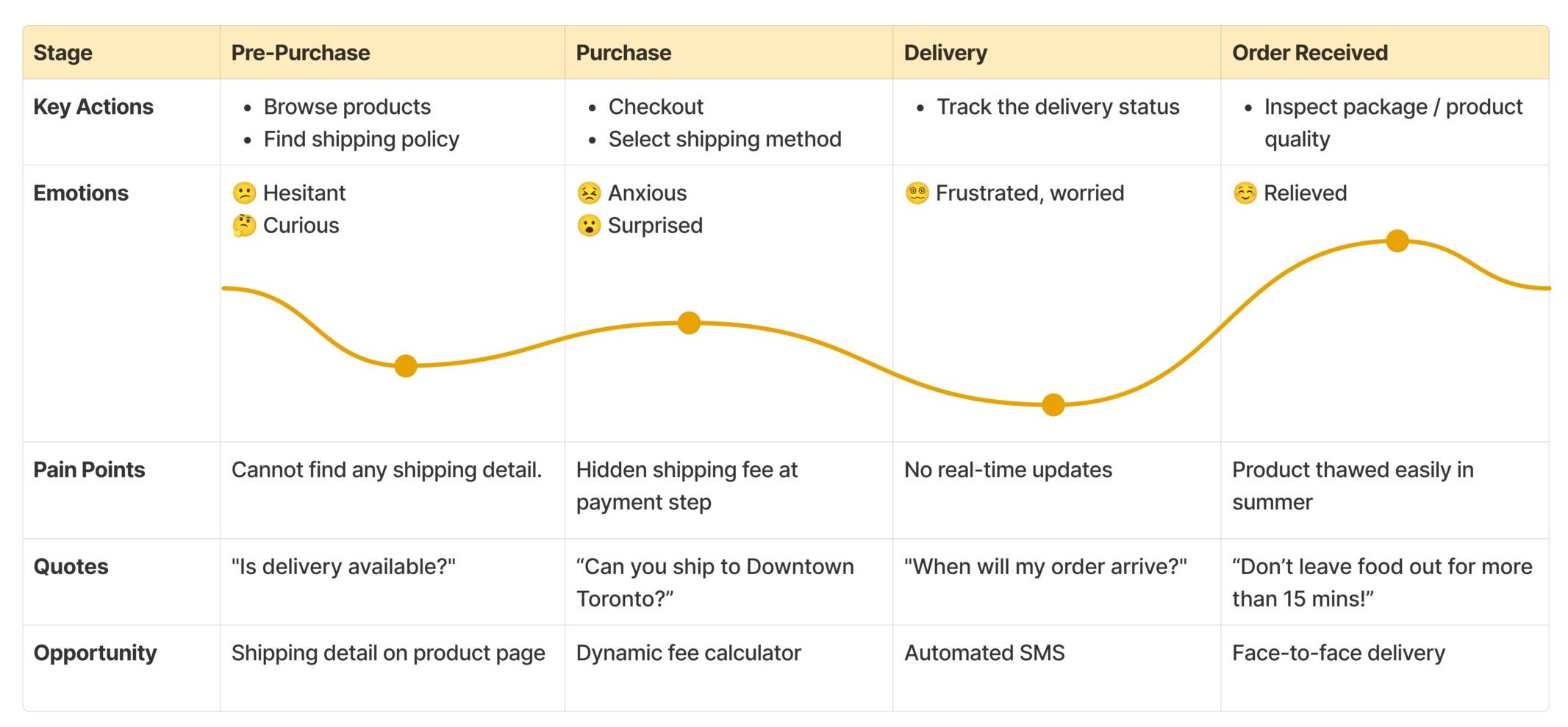
After organising research findings, I mapped these insights into two complementary visuals: a customer journey map to expose pain points across the end-to-end experience, and an operational workflow to reveal the backend root causes.
Customer Journey Map
Customer Frustrations
No delivery information available
Lack of transparency in shipping costs
No order status updates after purchase
Operational Flowchart
Operational Barriers
Manual customer coordination (calls/SMS)
Inconsistent fee calculations
Arrange driver delivery routes
Customer Pain Points
Unclear delivery pricing
Unpredictable delivery times
Limited delivery coverage
Operational Barriers
Manual order updates
Inconsistent pricing model
Design & Build
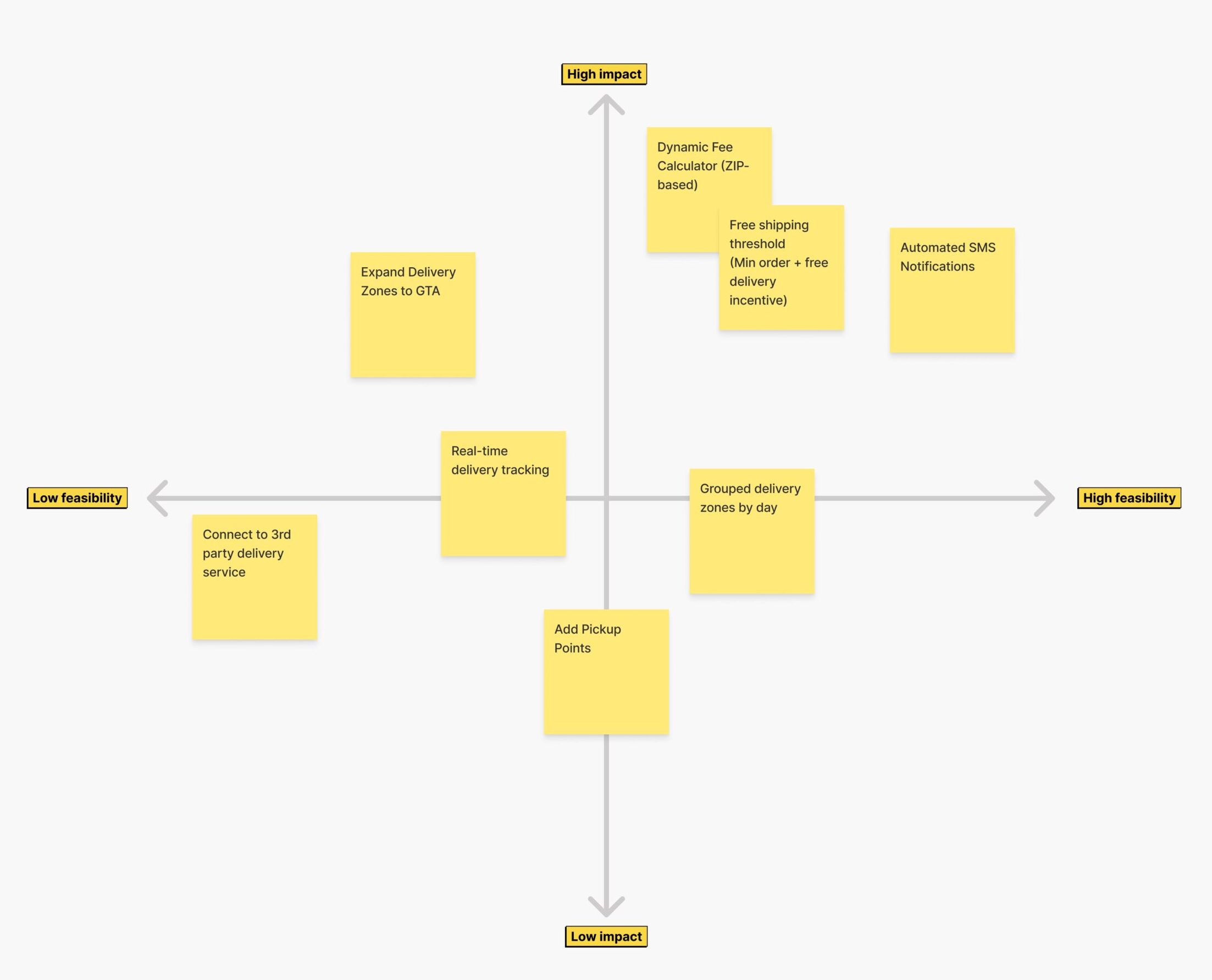
Prioritize high-impact solutions
To balance customer needs with technical limitations and business realities, I evaluated potential solutions from two perspectives:
Impact: Customer value + revenue potential
Feasibility: Development effort + operational readiness
I presented the results in a 2×2 prioritization matrix to align stakeholders, ultimately rolling out initiatives in phases: addressing urgent needs first while laying the foundation for scalable growth.
💡 Top-Priority Solutions
Clear shipping instruction
Show the shipping rate table early on the PDP.
Dynamic rate calculator:
Accurately calculate fees based on postal code and order amount.
Automated Notifications:
Automatic status notification via SMS/email.
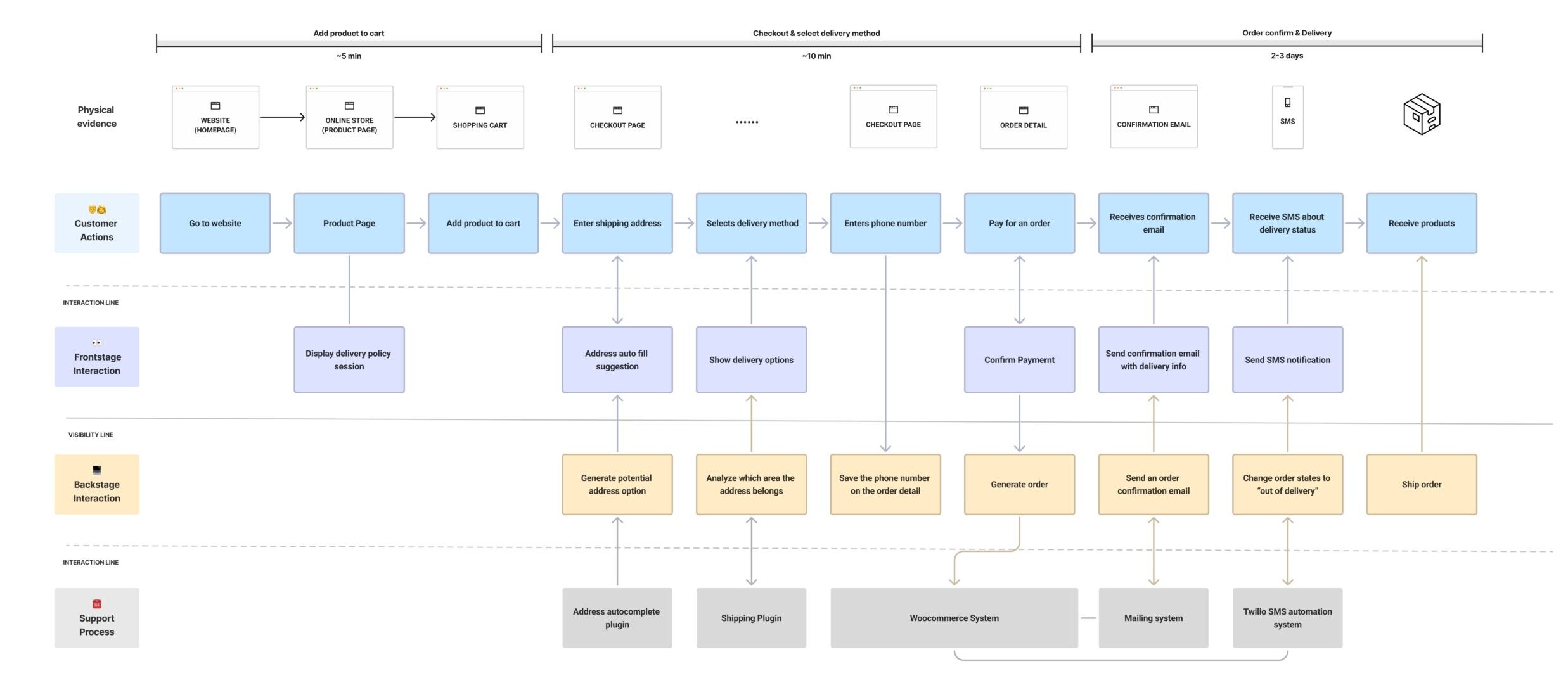
Map service blueprint for frictionless delivery
With stakeholder priorities confirmed, I mapped a service blueprint to ensure operational and customer needs were addressed. The blueprint codified three core pillars:
Customer trust: Automated fee calculators and prominently displayed shipping policies
Operational efficiency: System-triggered SMS notifications that eliminated manual updates
Technical foundations: Modular WooCommerce shipping rules + API integrations
Evaluate Existing Plugin Solution
To streamline shipping options without extensive custom development, I evaluated 3 WooCommerce plugins against critical criteria: user experience, feature completeness, and implementation cost. Our goal was to find a solution that met business requirements (like dynamic pricing and free shipping thresholds) while minimizing UI customization effort.
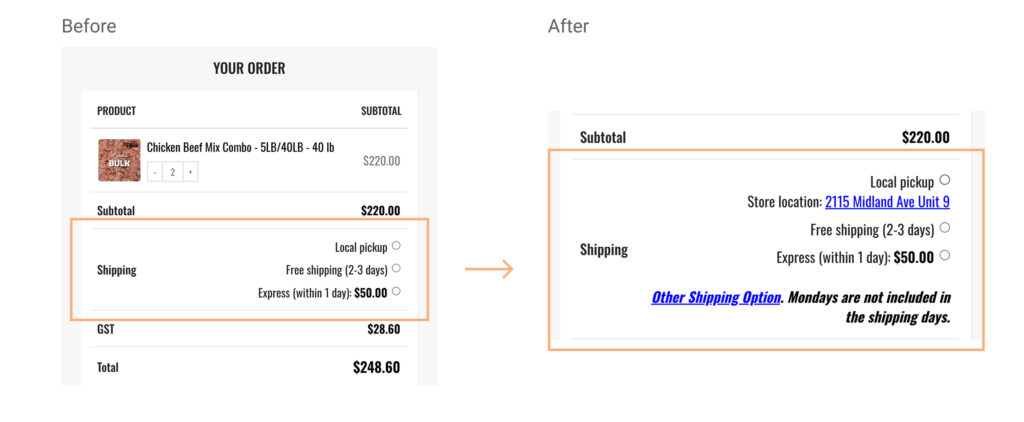
Despite the rigidity of the plugin framework, I enhanced the checkout experience through targeted front-end overlays using HTML and CSS. I optimized conversion rates through two key levers:
Visual Hierarchy & Branding: Consider variations in font weight, italics, and brand colors
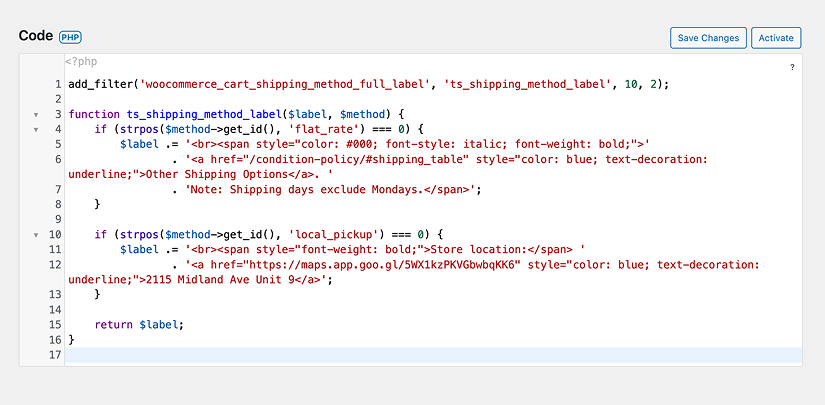
UX Writing Optimizations: Rewrote shipping labels and error messages directly in the plugin’s templates, injecting brand voice
Solution: Customer-oriented
Shipping Transparency:
Building Trust Before Checkout
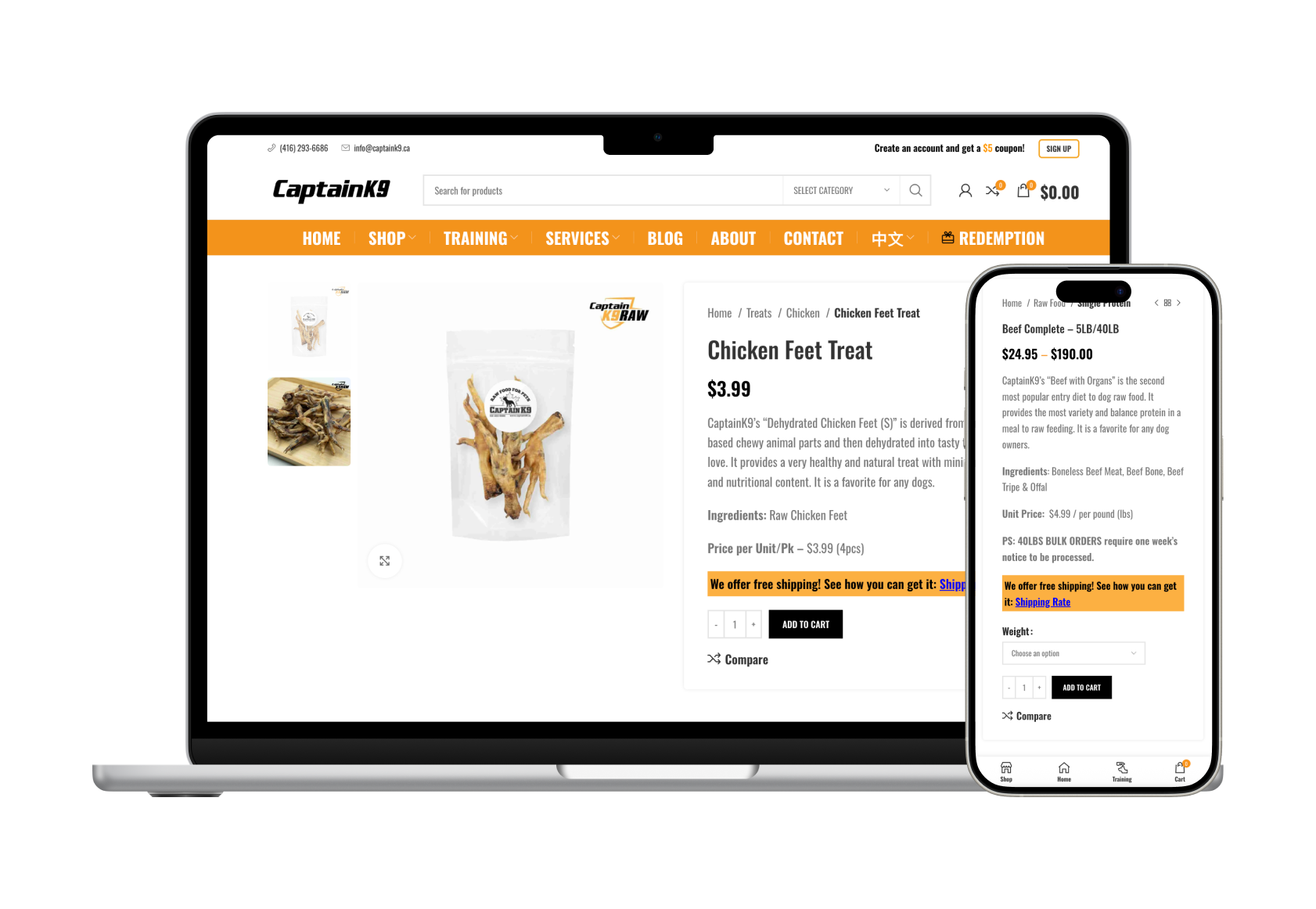
Proactive shipping information touchpoints on Product Detail Pages by adding clear shipping policy links next to “Add to Cart”.
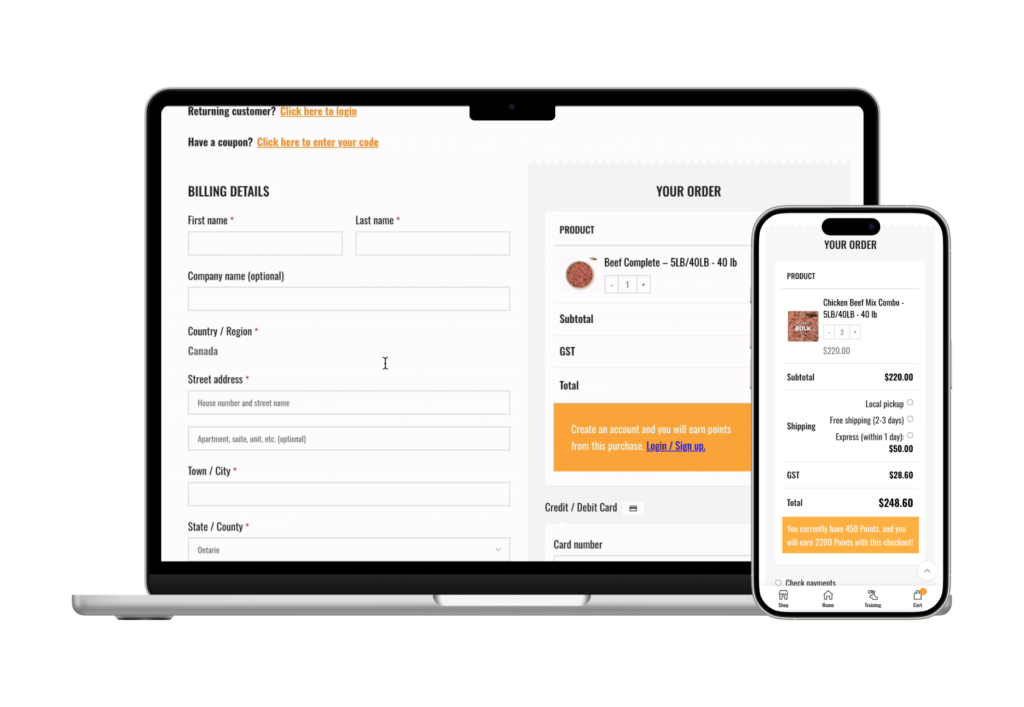
Dynamic shipping options now update based on zip code and cart value, and only relevant options with clear explanations are displayed.
Reliable Delivery Experience: Status Update Notifications
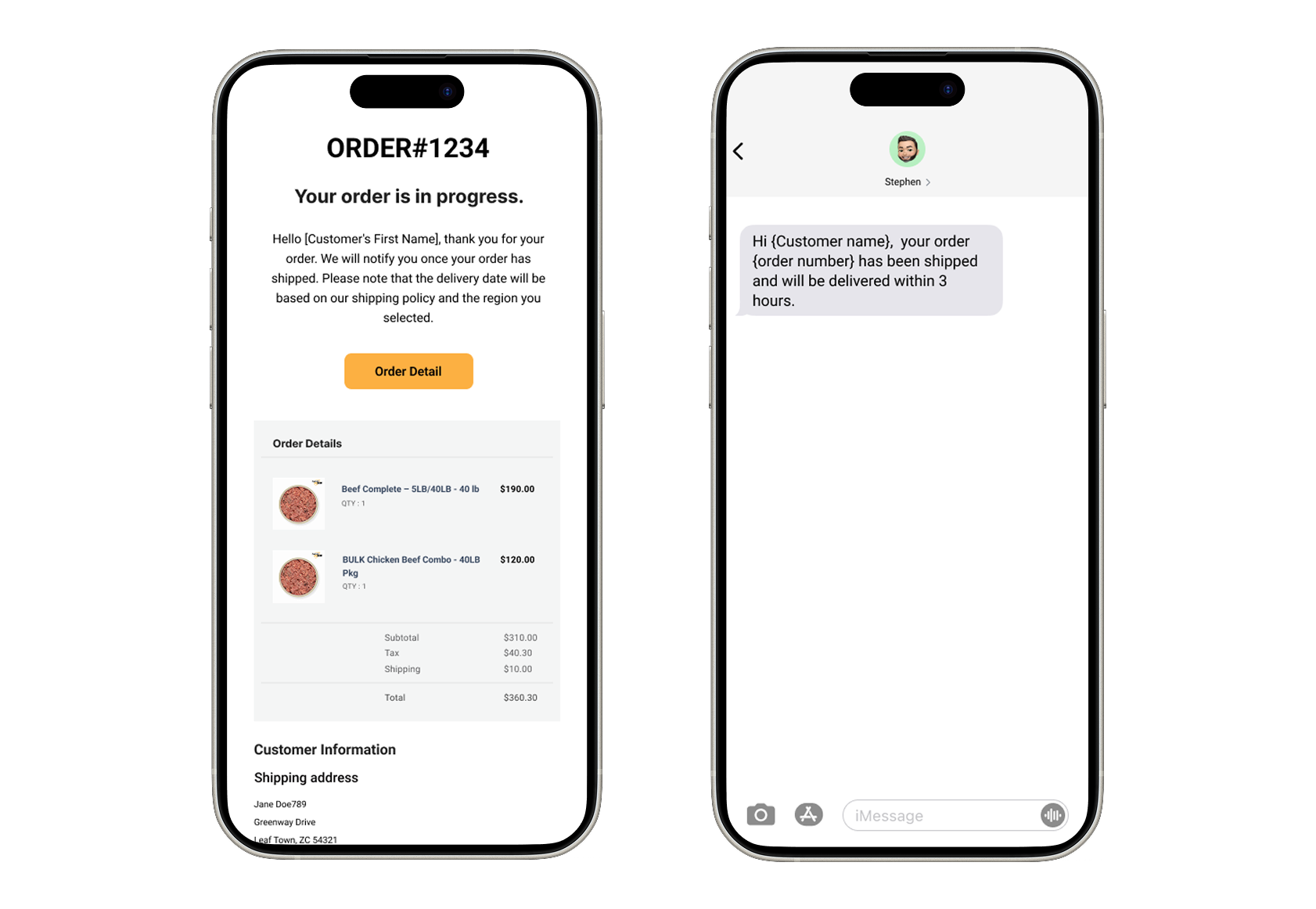
Automated email + SMS notifications at every order milestone (in progress, shipped, out for delivery), so customers knew their order status without having to ask.
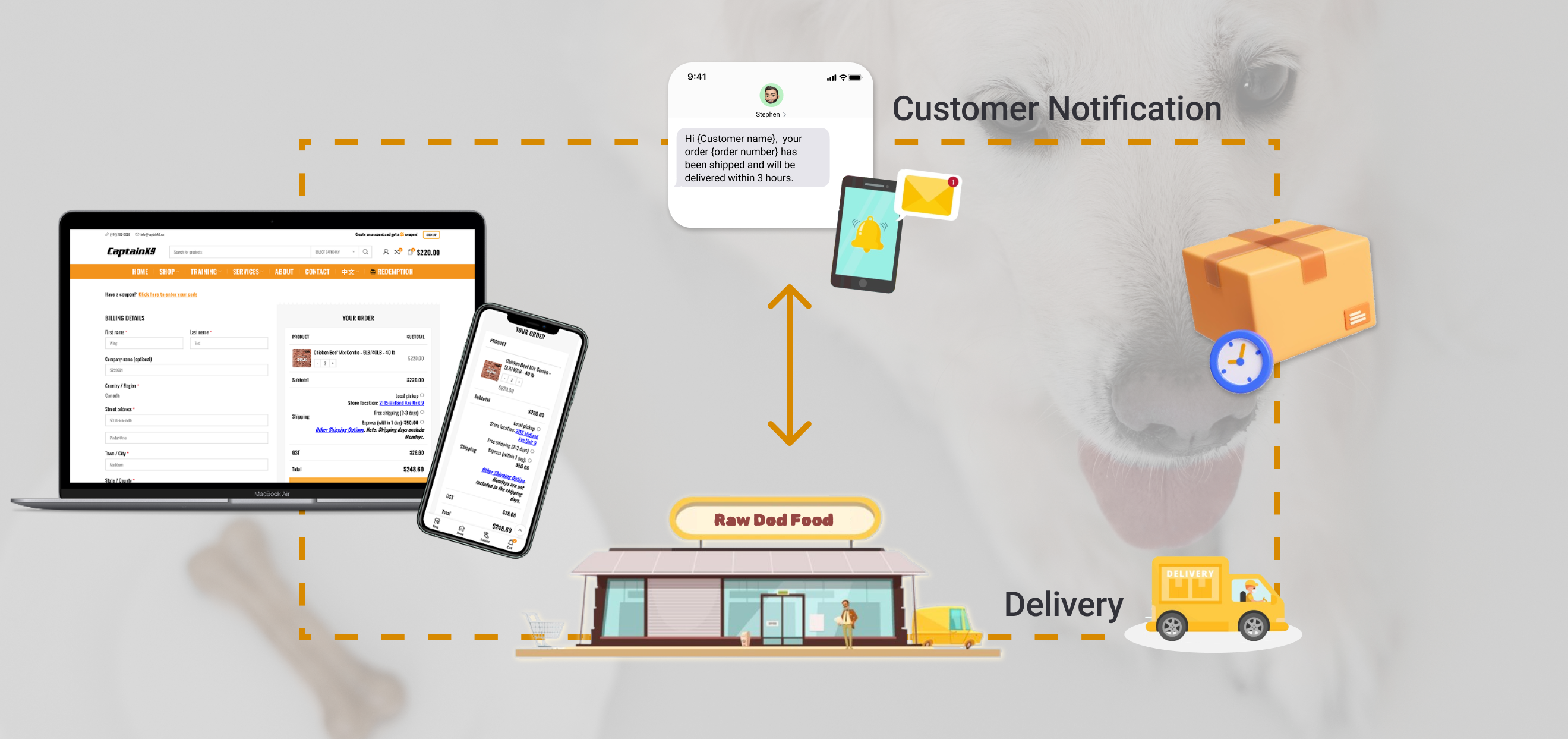
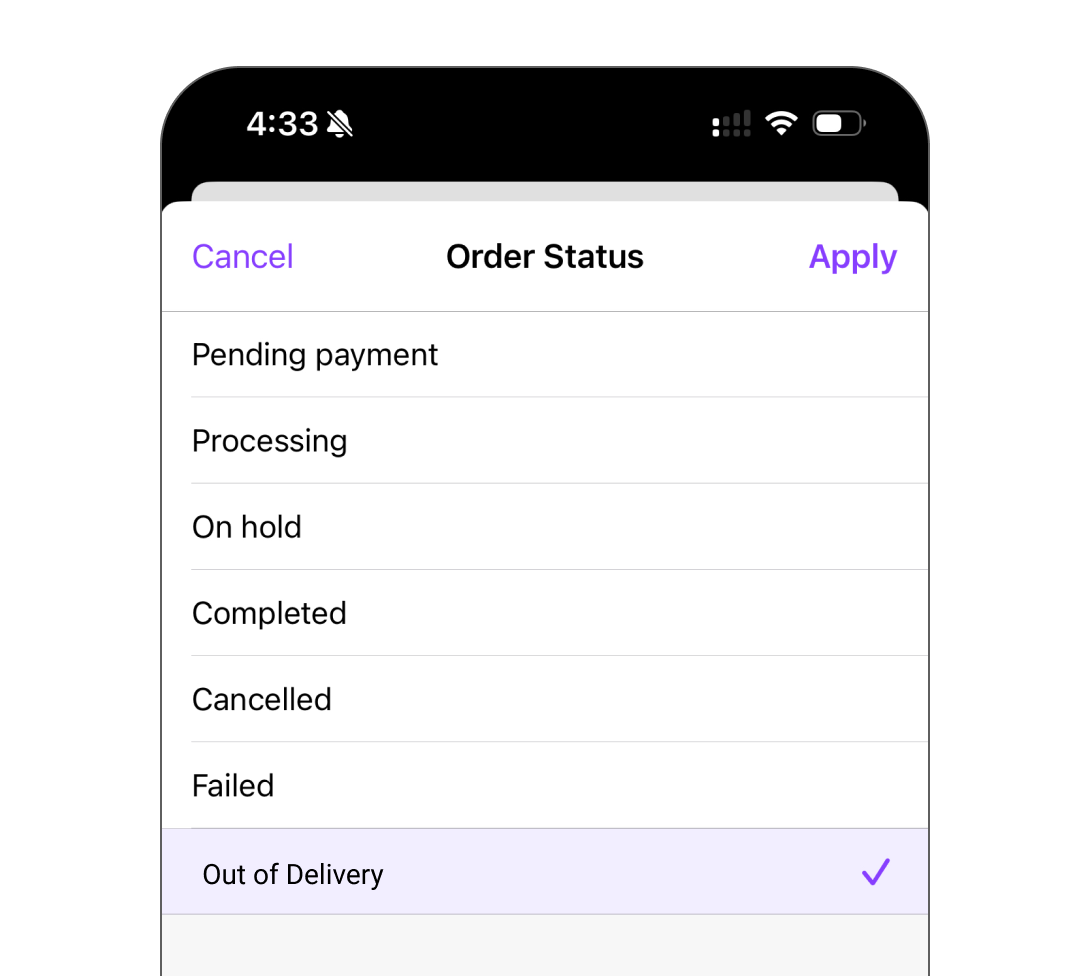
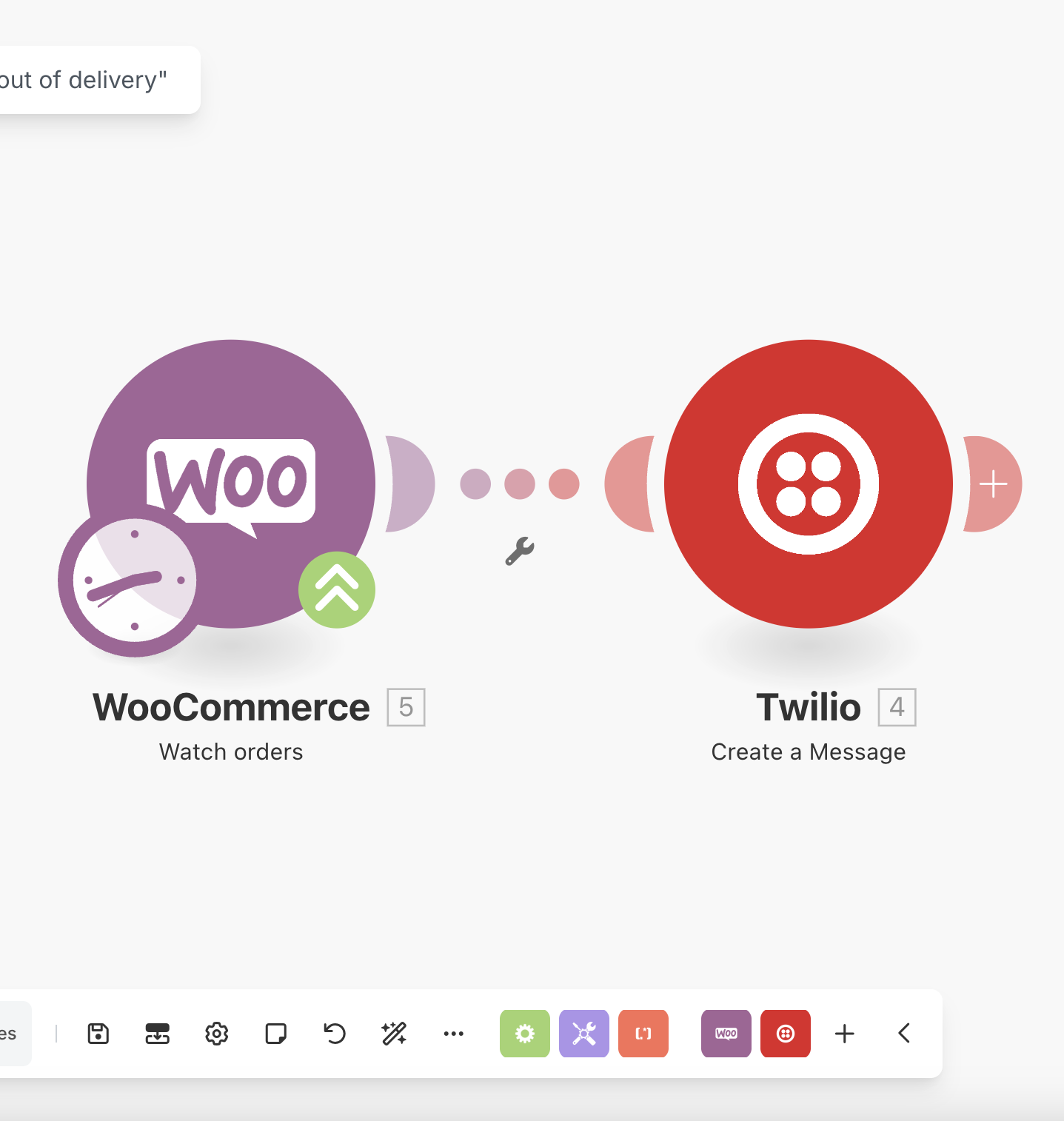
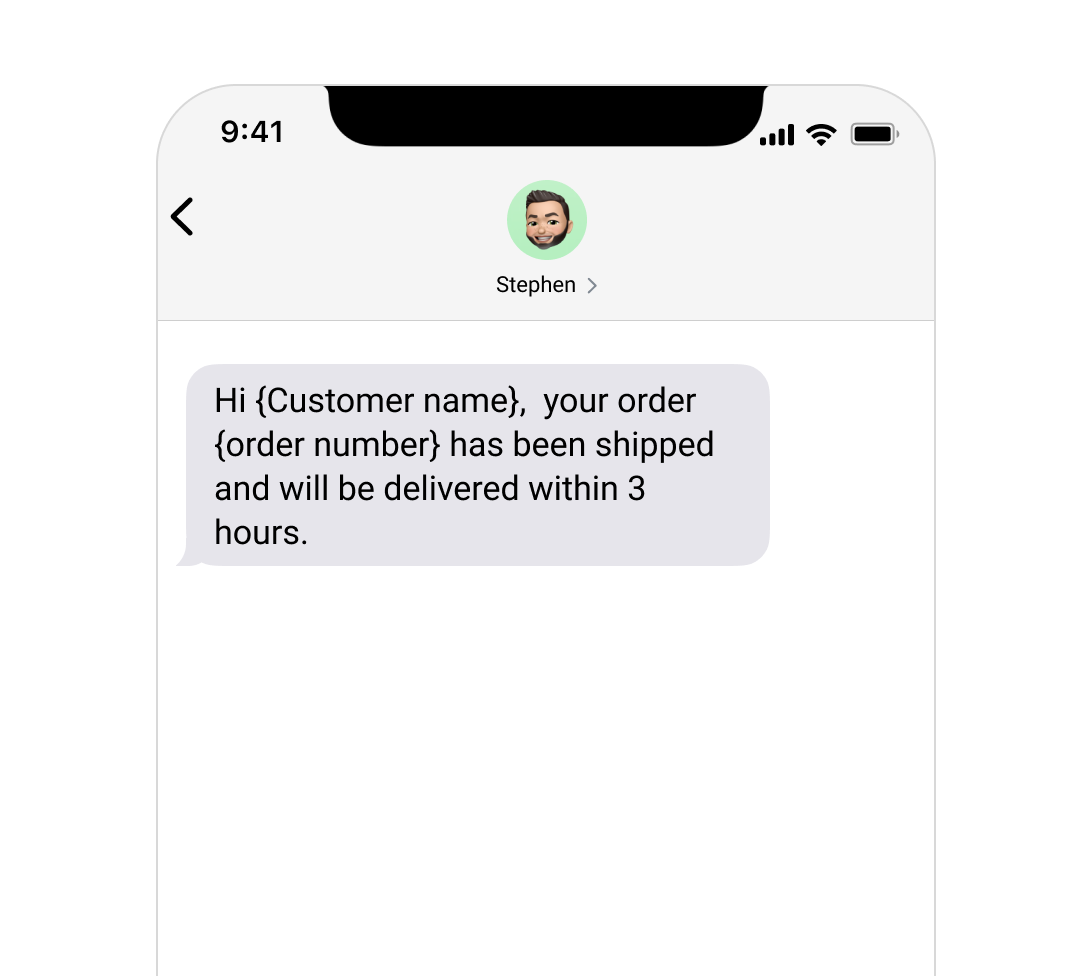
To eliminate time-consuming manual updates, I designed a notification system where WooCommerce order status changes automatically trigger delivery SMS via Make.com and Twilio. By adding a new order status “Out of delivery”, the staff can update the order status on the admin panel, and the system will send SMS messages to the customer.
(1) Staff can change order status to “Out of delivery” on admin panel
(2) Webhook configuration parsing WooCommerce data for Twilio
(3) Customer received delivery SMS
Solution
Touchpoints On Product Detail Pages
Clearly show the shipping policy on the product detail page.
Intuitive Checkout Process
Shipping options will be displayed on the checkout page based on the zip code + order amount entered by the customer.
Conclusion
Results & Strategic Impact
While Phase 1 launched concurrently, Phase 2’s delivery automation showed measurable standalone impact within 8 weeks, proving operational efficiencies could be achieved mid-redesign. Customer and staff feedback confirm that these improvements were distinctly attributable to delivery changes.
😄 Customer Impact
3X higher delivery adoption
15%+ of orders now use delivery (up from 5%)
Proves demand for the feature post-optimization
🚀 Business Growth Metrics
First-time buyers dominate delivery
50% of delivery orders come from new customers
Shows expanded geographic reach is acquiring untapped markets
⚙️ Operational Efficiency
70% less staff time wasted
Saved 3+ hours/week previously spent on manual coordination
Cross-Phase Amplification
Phase 1+2 Combined Effect
✓ 0.75% conversion lift across all checkouts
Smoother IA + transparent delivery pricing reduced friction
Unified branding built credibility for new delivery options
Phase 2’s Hidden Foundations for Phase 3
✓ Enabled 50% loyalty signup rate through:
Reliable frozen deliveries → built trust for membership commitment
Streamlined checkout → Made joining frictionless
Cross-Phase Amplification
Phase 1+2 Combined Effect
✓ 0.75% conversion lift across all checkouts
Smoother IA + transparent delivery pricing reduced friction
Unified branding built credibility for new delivery options
Phase 2’s Hidden Foundations for Phase 3
✓ Enabled 50% loyalty signup rate through:
Reliable frozen deliveries → built trust for membership commitment
Streamlined checkout → Made joining frictionless
Lessons I learned
Heading
Strategic Wins
🎯 “Shipping transparency drove 3X more impact than aesthetics alone”
🤝 “Involving customer support earlier improved SMS templates”
Technical Tradeoffs
⚙️ “WooCommerce constraints forced simpler solutions that still delivered 80% of ideal functionality”
“Plugin limitations require creative UX compromises—early technical audits are critical.”
“Stakeholder buy-in needs data + competitor benchmarks.”